3 hr
Milan Pasta & Tiramisu Cooking Class with Wine
Master fresh pasta and classic tiramisu in a Milan kitchen, then dine on your creations with paired wine.
Reserve
Hand-picked by our editors — only the best 5 experiences from 60 reviewed.
Verified partners for every tour, free cancellation where available, and instant confirmation on every booking.
3 hr
Master fresh pasta and classic tiramisu in a Milan kitchen, then dine on your creations with paired wine.
Reserve
3 hr
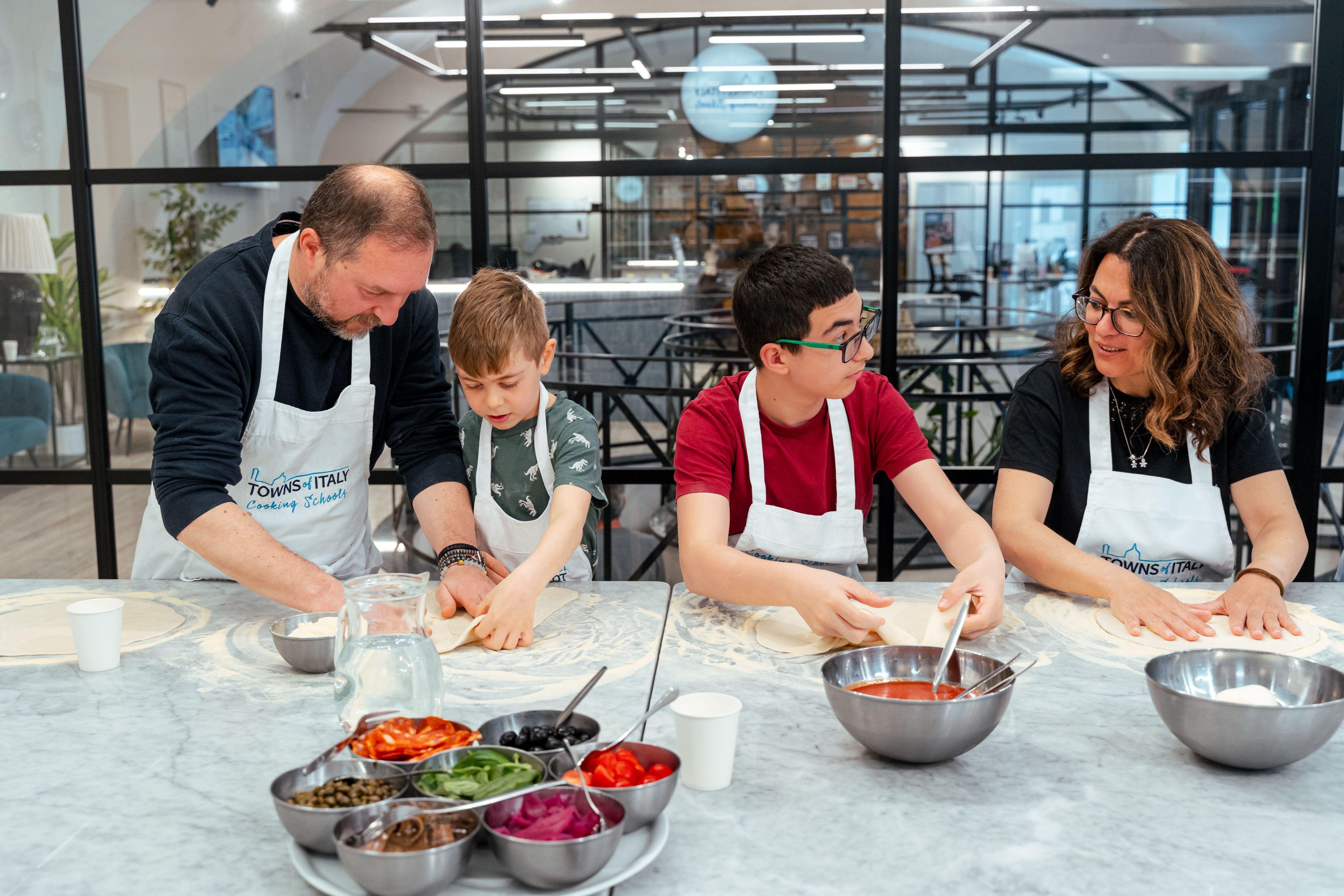
Pick your Italian culinary adventure — craft pizza or pasta from scratch with Milan's local chefs, wine included.
Reserve
3 hr
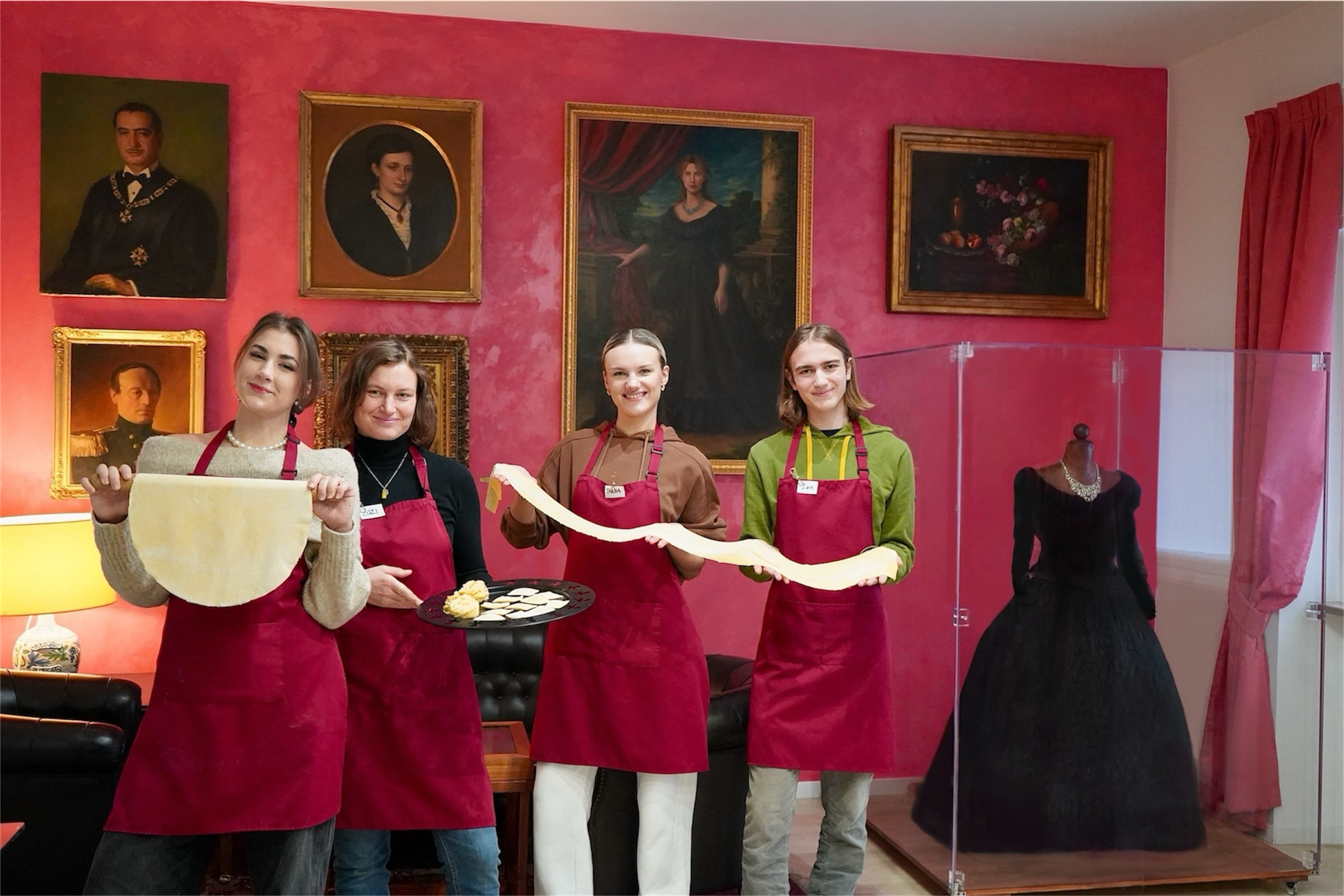
Master homemade ravioli, tagliatelle & tiramisù in an art-filled Milanese palazzo near the Duomo.
ReservePrices from verified partners. Availability updates in real time at checkout. Free cancellation policies apply where shown.
The landmarks, rooms, and views travelers on this tour remember — all visible on a single visit.
Master the art of mixing flour and eggs to create the perfect texture for handmade noodles. This is a foundational skill in any authentic pasta cooking class milan.
Private pasta cooking class milan sessions offer an intimate, home-style environment, while the professional academy provides a structured, high-capacity setting. Most visitors who experience both find the home-based setting more authentic for learning local traditions.
| Feature | Top pick Home-Based Class | Culinary Academy |
|---|---|---|
Setting Style |
Private home kitchen | Commercial kitchen facility |
Class Size |
1–6 participants | 10–20 participants |
Instruction Type |
Hands-on personalized guidance | Demonstration and workstation rotation |
Cultural Immersion |
Family recipe traditions | Formal technique mastery |
Skill Level Focus |
Beginner to intermediate hobbyists | Professional or intensive study |
Group Dynamics |
Social and informal | Structured and methodical |
| See tickets → |
Verdict: Choose the pasta cooking class milan tours for a personal connection to Italian culture, or select the academy if you prefer a rigid curriculum for your pasta cooking class milan tickets.
Choose your ticket, select your date, and reserve in under two minutes. Secure checkout handled by our verified partner.
Instant confirmation by email, with a mobile voucher you can save offline. No printing, no queuing at a collection desk.
Arrive at the entrance, show your voucher on your phone, and walk in. Most tickets include priority or skip-the-line access.
Practical details for your visit straight from our verified partners — hours, access, rules, and how to get there.
Piazza Duca d'Aosta
Standard meeting point for many tours
Use lines M1, M2, or M3 to reach central districts. Many meeting points for a pasta cooking class milan are near central stations.
Milan's tram network connects historic areas efficiently. Check local apps for real-time updates.
Casual and comfortable attire is recommended. Closed-toe shoes are advised for safety in a kitchen environment during your pasta cooking class milan.
Personal belongings can be stored in designated areas at the venue. Secure your valuables as operators are not liable for items left during your pasta cooking class milan.
Photography is generally encouraged during the preparation process. Capture your culinary creations during the pasta cooking class milan.
Most venues are accessible, though historic buildings in Milan may have limitations. Contact your host ahead of time for specific pasta cooking class milan needs.
Use of mobile phones is permitted for photos. Keep devices away from prep surfaces during your pasta cooking class milan.
Children are welcome when accompanied by adults. Many classes offer specialized content for families attending a pasta cooking class milan.
Participants consume the meal prepared during the session. Inform your host of allergies prior to your pasta cooking class milan.
Pets are not permitted in private kitchen venues. This rule applies to all pasta cooking class milan providers.
Each pasta cooking class milan uses local, seasonal ingredients. Classes are private and typically held in residential or professional kitchen settings.
Best time to go, insider tips, nearby landmarks, and the cancellation fine print — flip through to skim what matters to you.
How crowds, weather, and events shift across the year.
March to May offers mild weather for exploring the city before your pasta cooking class milan. It is ideal for walking between landmarks.
June to August is warm and lively. These months are popular for those seeking an indoor pasta cooking class milan experience.
September to November provides cool air and harvest-themed ingredients. Perfect for seasonal cooking classes.
December to February is chilly but perfect for cozy indoor activities. Enjoy a warm kitchen environment.
Small details that turn a good visit into a great one.
Secure your pasta cooking class milan tickets early to guarantee availability. Popular sessions fill up quickly during peak seasons.
State any dietary restrictions upon booking. Hosts need time to source alternative ingredients for your pasta cooking class milan.
Wear layers and practical footwear. You will spend hours standing during your pasta cooking class milan.
Engage with your chef to learn local techniques. They provide insider knowledge during your pasta cooking class milan.
Plan to arrive 15 minutes before the start. This ensures you do not miss the introduction to your pasta cooking class milan.
Non-bookable sights within a short walk — free to visit, easy to pair.
A massive Gothic cathedral and a symbol of the city. Visit the roof for expansive views of Milan.
One of the oldest shopping galleries in the world. Features stunning mosaic floors and glass vaults.
A world-renowned opera house. Known for its prestigious history and neoclassical architecture.
Flexible, no hidden fees.
Cancellation terms are defined by the specific private operator selected during booking. Please review your confirmation email for the refund window applicable to your pasta cooking class milan.
Hand-picked options within walking distance — pick a district for vibe, or a specific hotel for convenience.
A charming area known for galleries and boutique hotels.
Central district with high-end hotels steps from landmarks.
Egg pasta was a northern luxury long before it was a national habit: in Lombardy, semolina gave way to soft wheat and yolks, and the dough became a matter of hands rather than machines. Milan inherited that logic. The city built its reputation on risotto and cotoletta, yet the sfoglia — the rolled sheet — remained the household test of competence, passed down in kitchens rather than schools. That domestic lineage explains why a pasta cooking class milan session so often takes place in an apartment rather than a culinary academy. The instruction is not institutional. It descends from the azdora tradition of Emilia and the Lombard home cook, where a wooden board, a mattarello and a scraper were the entire toolkit. Sfoglia was judged by translucency, not thickness gauges. Ravioli were sealed by thumb pressure. The same gestures survive in the private kitchens hosting corso di cucina milano sessions today, several of them in historic residences with original terrazzo floors and shuttered courtyard windows. Milan's food identity shifted decisively after the war, when southern migration brought durum wheat, tomato and a taste for dried formats into a city of butter and rice. The result is unusually plural. A modern Milan pasta making tour might work tagliatelle, ravioli and gnocchi in a single afternoon, then finish with tiramisù — a dessert of Veneto origin, standardised in the 1970s, now the default sweet course of the Italian table. Gelato, likewise, is a Milanese commercial fixture rather than an invention; the city's gelaterie industrialised the artisanal formula. The cooking class as a visitor format is younger still. It arrived with Expo 2015, when Milan spent six months arguing about food systems and discovered that travellers wanted to make things, not only eat them. Home kitchens registered as licensed hosts. Chefs opened private studios near Porta Romana, Brera and the Navigli. By 2026 the format is mature enough to specialise: pasta and tiramisù, pizza and gelato, ravioli-focused sessions, wine-paired evenings. What holds it together is technique that predates all of it. Flour, egg, salt, time. A dough rested thirty minutes behaves differently from one rolled immediately. Ravioli filling must be dry enough not to weep. The pasta cooking class milan format endures because these rules are physical and unforgiving, and because they are best learned standing at a board with someone correcting the angle of your wrist. Milan, a city of design and precision, turns out to be a reasonable place to learn them.

"Sfoglia was judged by translucency, not thickness gauges."
A step-by-step walkthrough of the visit — what you'll see, how long each stage takes, and the details that matter.
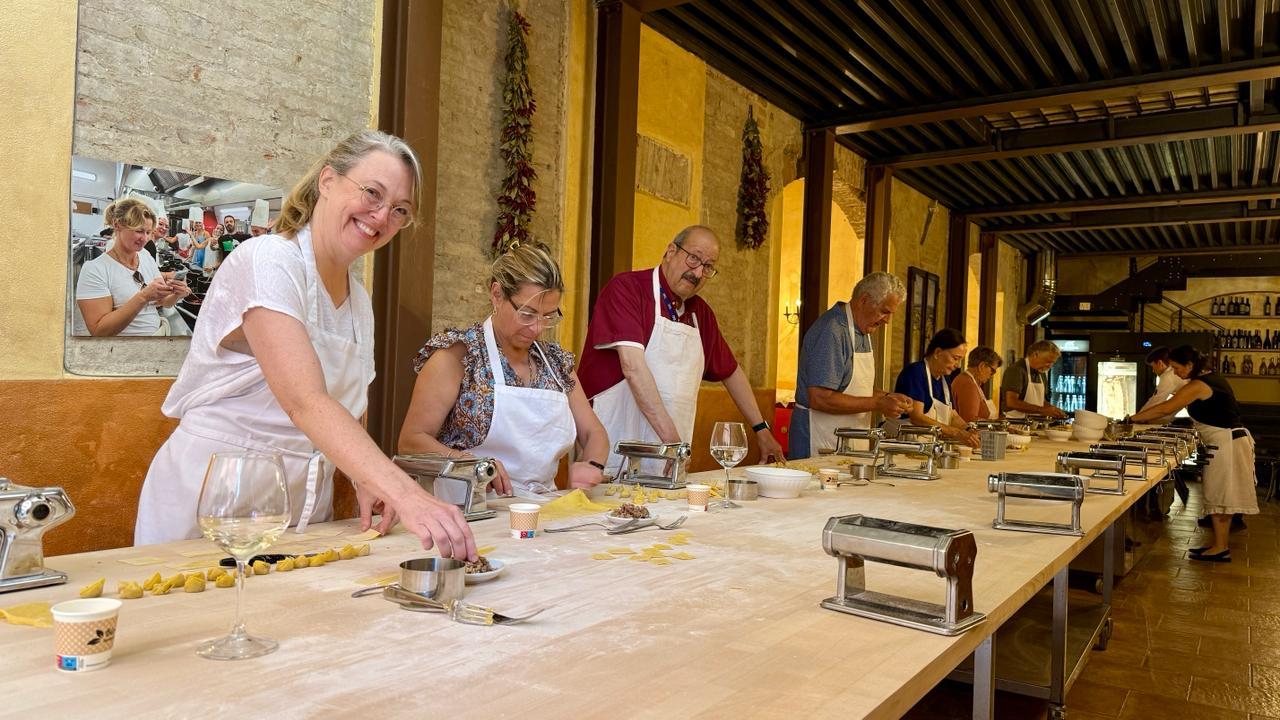
You arrive fifteen minutes before your booked time — classes run by appointment, with slots across the 09:00–21:00 window — and press a buzzer at a residential door rather than a ticket desk. There is no entrance fee here; the session itself is the booking. Someone hands you an apron and a glass, and you meet the other four or six people who will spend the next few hours with their hands in flour. The board comes first. You crack eggs into a well of flour, drag the walls inward with a fork, then commit to kneading — eight to ten minutes, until the dough stops sticking and starts pushing back. It rests under a bowl. You roll it thin enough to read light through, cut tagliatelle in ribbons or press ravioli in rows, and discover that your first six are misshapen and your last six are not. Most pasta cooking class milan tours then turn to dessert. You whip mascarpone with egg and sugar, dip savoiardi briefly — too long and they collapse — and layer them into a dish that goes cold while you eat. Then you sit. The pasta you made comes to the table with wine, and the class becomes dinner. You leave around three hours later with the recipe, a slightly floury phone, and a functioning sense of how thin is thin enough.
The classes operate daily from 09:00–21:00. Please confirm your session time when booking your pasta cooking class milan.
Yes, private services must be booked in advance to secure your spot. Entrance is not applicable as these are private sessions.
Most venues are accessible, though you should check the specific site for your pasta cooking class milan.
Yes, photography is permitted throughout your pasta cooking class milan experience.
Any season is perfect, though summer is popular for an indoor pasta cooking class milan.
Yes, families are welcome. It is a great way to learn to cook in a pasta cooking class milan.
Policies vary by provider. Check your booking details for the specific refund rules regarding your pasta cooking class milan.
Yes, the meal you prepare and often local drinks are included in the pasta cooking class milan.
You can reach meeting points via public transport or taxi. Arrive 15 minutes before your pasta cooking class milan.